

Diesel theft on construction sites is a recurring cost for the industry. Locks, cameras and fuel marking all help, but they rarely show what happens to a mobile tank. That is why we look at the measures the industry uses today, where they fall short, and how you can spot a deviation the moment it happens.
How common is diesel theft on construction sites?
Theft affects four in ten construction sites in Sweden, according to a survey by Ramirent. Petrol and diesel are among the items that disappear most often. Machinery, hand tools and copper also go missing.
In other words, this is not a matter of occasional bad luck. Theft is an established cost in the industry, and companies discuss it openly. One example is the seminar “Stölder till tusen” (“Thefts by the thousand”) at the Entreprenadexpo trade fair. There, police, insurers and industry representatives reviewed the situation together.
Is construction site theft decreasing?
Yes, overall. According to Byggföretagen (the Swedish Construction Federation), reported break-in thefts from construction sites fell by 20 percent between 2024 and 2025. Since 2020, the decrease is 40 percent. Targeted efforts against organised theft gangs explain much of this. In addition, a new law makes it harder to take stolen goods out of the country.
However, the decline varies between regions. The figures also say nothing about fuel and mobile tanks. That is a different type of problem from the theft of machinery and tools.
Which measures against diesel theft does the industry use today?
The industry is far from passive. At the seminar, participants discussed measures such as these:
- Blue diesel. The fuel carries a marker that makes stolen diesel easier to identify. This increases the risk for the thief, but it does not stop the fuel from disappearing.
- Camera surveillance. One example is trail cameras with alarms. They help identify offenders and make it possible to report a theft in real time. However, the camera must already point at the right spot.
- Better locks and immobilisers. Similar to those in passenger cars. Industry representatives argue that manufacturers should make them standard, but that is not yet the case.
- DNA marking of equipment. The police can then link recovered goods to a reported theft. On the other hand, it does not help you detect the theft.
- ID06 checks. ID06 is the Swedish ID and access system for construction sites. It is one of the simplest ways to limit who can access a site. Even so, only 62 percent of sites carry out these checks, according to Ramirent.
Where do these measures fall short?
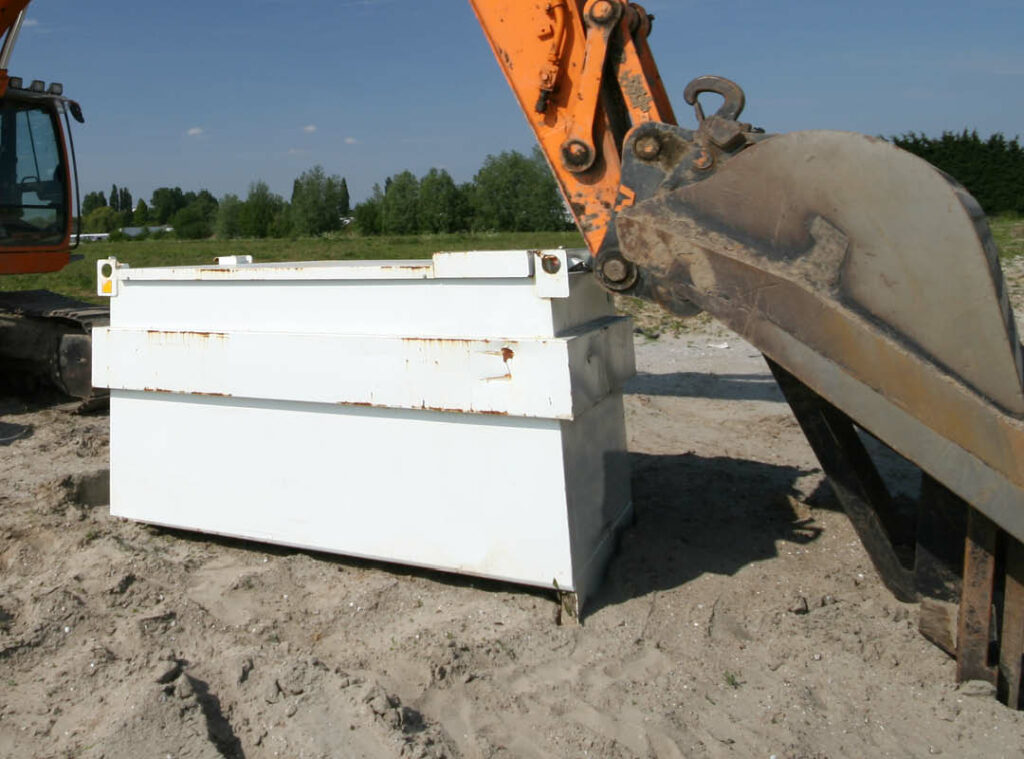
Most of these measures protect vehicles and fixed equipment. Others increase the risk for the thief or make the investigation easier afterwards. Few of them, however, suit a mobile tank. After all, you need to be able to move the tank, it often stands unattended for long periods, and its consumption varies from week to week.
What is missing: seeing the deviation as it happens
Today, people usually discover theft from a mobile tank in one of two ways. Either someone sees it happen, or someone checks the level at the next site visit. That can take several days. Both methods therefore rely on luck and timing, not on systematic monitoring.
TankTrack and SiteEasy II fill exactly that gap. Together, via SiteInfo, they show:
- Where the tank is. TankTrack shows the tank’s position in real time. You see immediately if someone has moved it without a plan.
- How much is left. SiteEasy II measures the level in the tank. You also see if it drops faster than the work on site justifies.
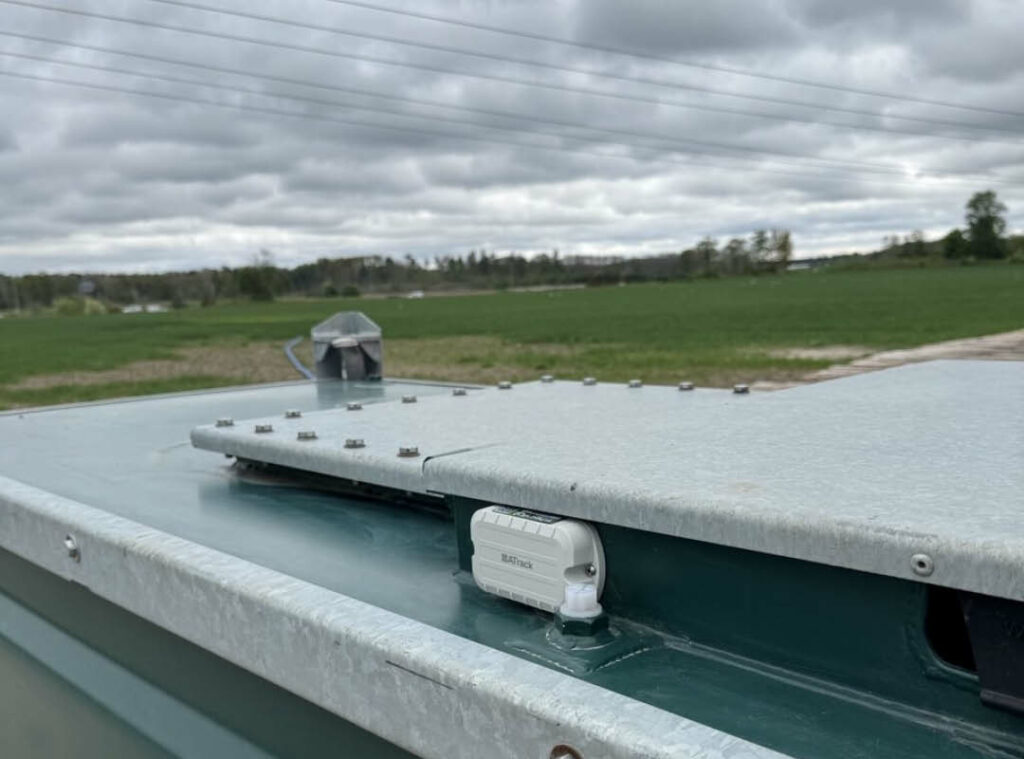
As a result, you see the deviation when it happens, not afterwards. The solution does not replace cameras or locks. Instead, it covers what they do not: what happens to the tank itself, around the clock, without anyone having to drive out to check.
Why isn’t standard vehicle tracking enough for mobile tanks?
Most fuel monitoring systems target vehicle fleets. They connect sensors to the engine’s control system. In other words, they assume that the fuel sits in a vehicle with power, connectivity and a natural movement pattern.
A mobile tank, on the other hand, has none of this. It can stand switched off for weeks. Then a truck takes it to the next project. Sometimes it even stays behind after the rest of the equipment has left. Vehicle logic is therefore a poor fit, and manual dipping does not fully cover the gap either. TankTrack instead starts from how mobile tanks work in practice – not from how vehicles do.
More than theft protection for distributors and rental companies
For fuel and lubricant distributors, this is about more than security. The same goes for companies that rent out machinery and tanks. It is also about knowing what you have actually delivered and where your equipment is between customers. Furthermore, it is about being able to trust your own figures.
TankTrack and SiteEasy II are two independent units. Together, via SiteInfo, they give you a continuous view of where the tank is and how much is left. If one unit loses its connection one day, you still have the other. So you are never left completely in the dark.
Summary
- Theft affects four in ten construction sites in Sweden, and diesel is among the items that disappear most often.
- Locks, cameras, blue diesel and DNA marking help, but they mainly protect vehicles and fixed equipment.
- Mobile tanks need a dedicated solution, because they move, stand unattended and have varying consumption.
- TankTrack and SiteEasy II show position and level in real time via SiteInfo. As a result, you can spot a deviation as it happens.
Frequently asked questions
How can you prevent diesel theft on construction sites?
Common measures include blue diesel, camera surveillance with alarms, better locks and immobilisers, DNA marking and ID06 checks. For mobile tanks, you also need to monitor position and level so that you detect theft immediately.
What is blue diesel?
Blue diesel is diesel with a marker that makes stolen fuel easier to identify. It makes theft riskier, but it does not stop the fuel from disappearing.
How do you detect theft from a mobile diesel tank?
With TankTrack and SiteEasy II, you can see in SiteInfo where the tank is and how much is left. If someone moves the tank unexpectedly, or the level drops too fast, you see it straight away.
Want to know how TankTrack and SiteEasy II could work for your tanks? Contact us and we’ll tell you more.
Sources (in Swedish)
- Ramirent – Fyra av tio byggarbetsplatser drabbade av stöld
- Entreprenad.com – Dieseltjuvar härjar på byggarbetsplatser: Nu får företagen direkta varningar
- Entreprenad.com – Stölder – ett hett ämne på Entreprenadexpo
- Byggföretagen – Byggstölderna minskar – insatser mot stöldligor ger resultat
Yoast-fälten på engelska
- Focus keyphrase: diesel theft on construction sites
- SEO title: Diesel theft on construction sites – what helps? | MCD
- Slug: diesel-theft-construction-sites
- Meta description: Four in ten construction sites in Sweden are hit by theft. See which measures against diesel theft work – and how to spot deviations in mobile tanks instantly.
Alt-texter på engelska
- Utvald bild: Refuelling with diesel on a construction site with a crawler dozer in the background
- Bild 1: Mobile diesel tank next to an excavator – diesel theft on construction sites often targets unattended tanks
- Bild 2: TankTrack mounted on a mobile fuel tank for real-time position tracking
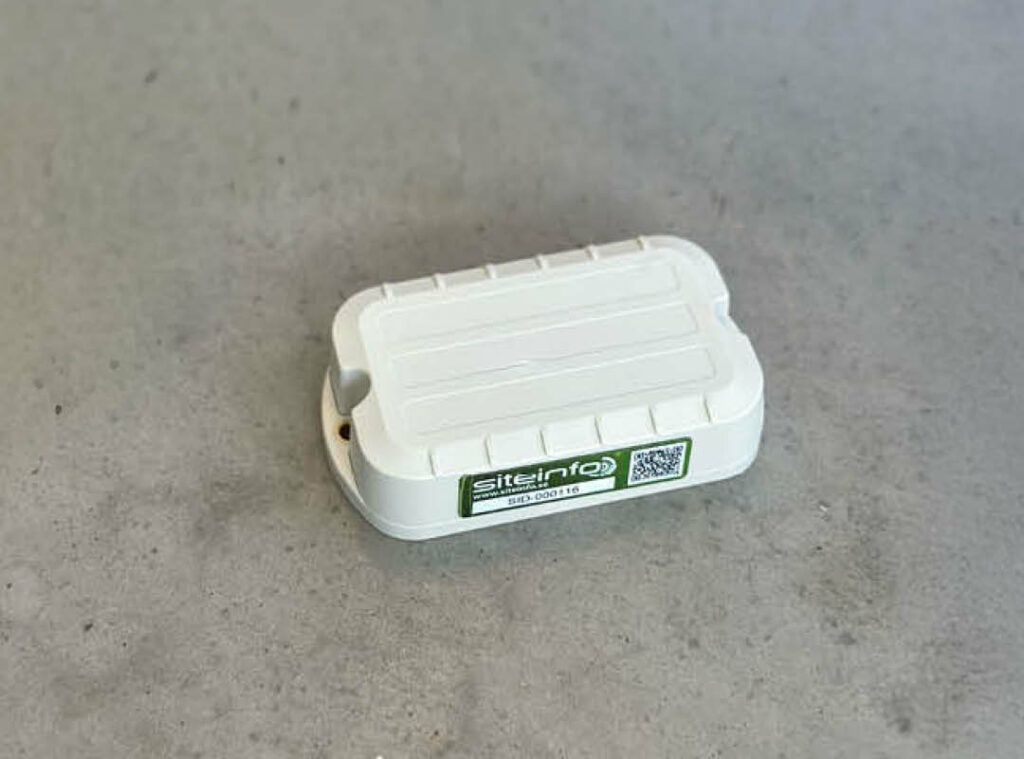
- Bild 3: TankTrack, a position tracker from SiteInfo for mobile tanks
Engelska interna länkar
- TankTrack: https://mcd.se/en/products/siteeasy/#siteeasy-tanktrack. Testa att länken hoppar rätt. Om den inte gör det, använd https://mcd.se/en/products/siteeasy/
- SiteEasy II: https://mcd.se/en/products/siteeasy/
- SiteInfo: https://mcd.se/en/our-service-siteinfo/