
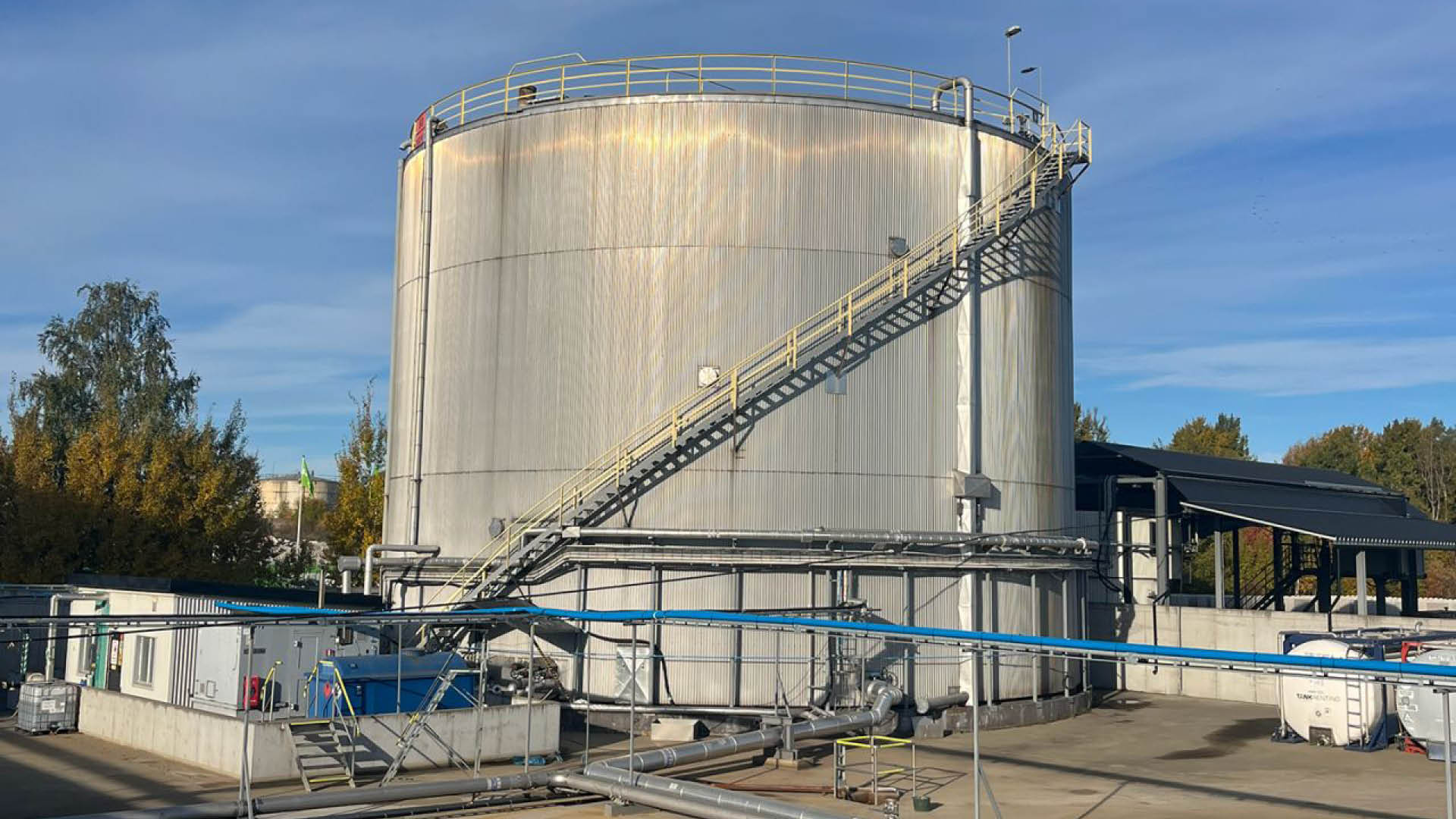
One of the chemical tanks at TopFuel’s loading station in Norrköping. TopFuel is a sister company of MCD, specialising in the handling and measurement of flow systems for chemicals.
The crises and supply disruptions in Europe in recent years have made chemical supply something Swedish treatment plants can no longer take for granted. At the same time, the requirements on critical services to keep control of their resources are being tightened. For anyone running a treatment plant, chemical tank level measurement has therefore gone from a practical convenience to part of basic operational reliability – and that is exactly what this article is about.
A process that must not stop
A treatment plant cleans wastewater around the clock, every day of the year. In that process, chemicals are not an add-on – they are a prerequisite. Without the right chemicals in the right place, treatment simply doesn’t work.
The most common chemicals used in Swedish wastewater treatment plants and waterworks are:
- Ferric chloride and polyaluminium chloride (PAC) – for coagulation and precipitation of phosphorus and particles
- Lime – for pH adjustment
- Caustic soda (sodium hydroxide) – also for pH control
- Chemicals for nitrogen reduction
Each of these has a specific function in the treatment process, so they cannot replace one another. If a tank runs dry, that part of the process stops.
How many tanks are we talking about?
It’s easy to underestimate the volume. A typical treatment plant has several separate chemical tanks – one per chemical, sometimes more. Sweden today has around 1,200–1,300 wastewater treatment plants and just over 1,750 waterworks, according to Svenskt Vatten. In terms of size, it can look like this, for example, based on MCD’s experience in the industry:
- Large treatment plants: 8–12 chemical tanks
- Medium-sized treatment plants: 4–6 chemical tanks
- Small treatment plants: 1–3 chemical tanks
- Waterworks: 3–6 tanks
Whatever the size of the facility, the basic question is the same: how do you make sure that the level of every chemical tank is measured reliably and in real time? For a medium-sized treatment plant, for example, this means keeping track of five or six tanks with different chemicals, from different suppliers, with different consumption rates, at any given moment. Without chemical monitoring at the treatment plant, it is therefore hard to know exactly what is in stock – and even harder to know when it’s time to order more.
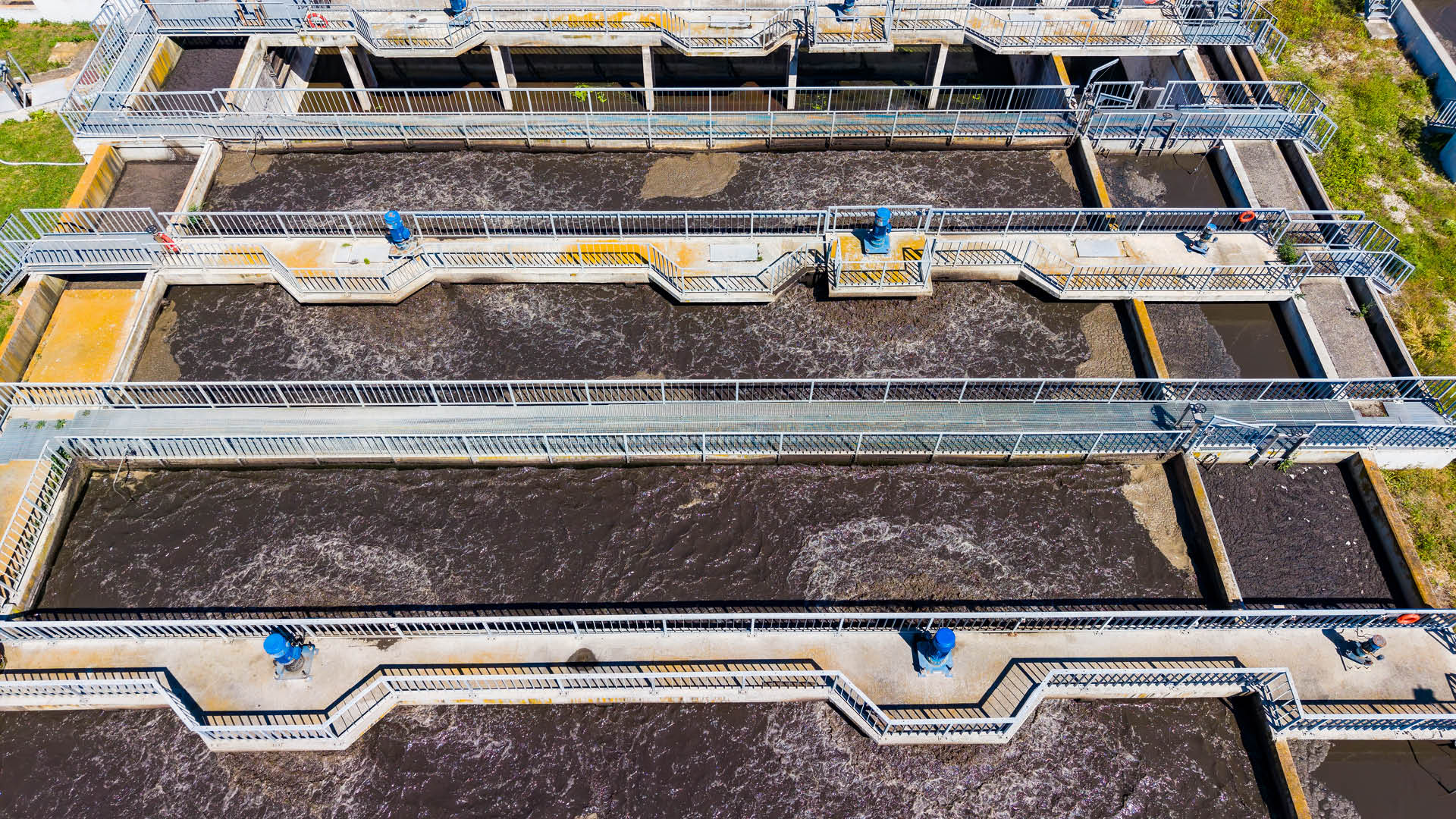 Aerial view of a wastewater treatment plant. Facilities of this size typically have 4–6 chemical tanks – sometimes from several different suppliers, each with their own refill routines.
Three reasons why accurate level measurement has become more important
There have always been practical reasons to keep track of your chemical tanks. In recent years, further reasons have emerged that make exact, logged levels feel increasingly urgent.
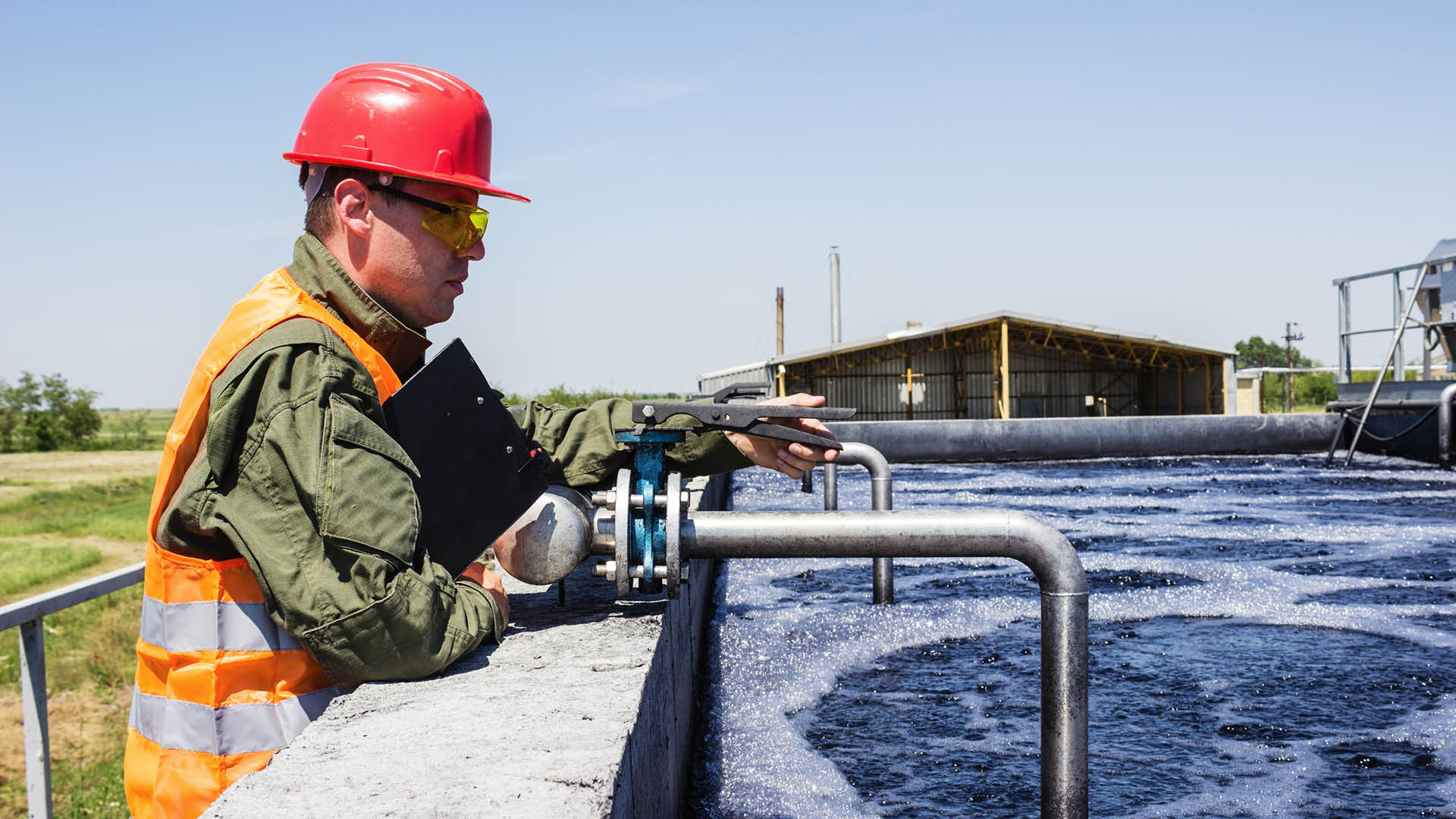
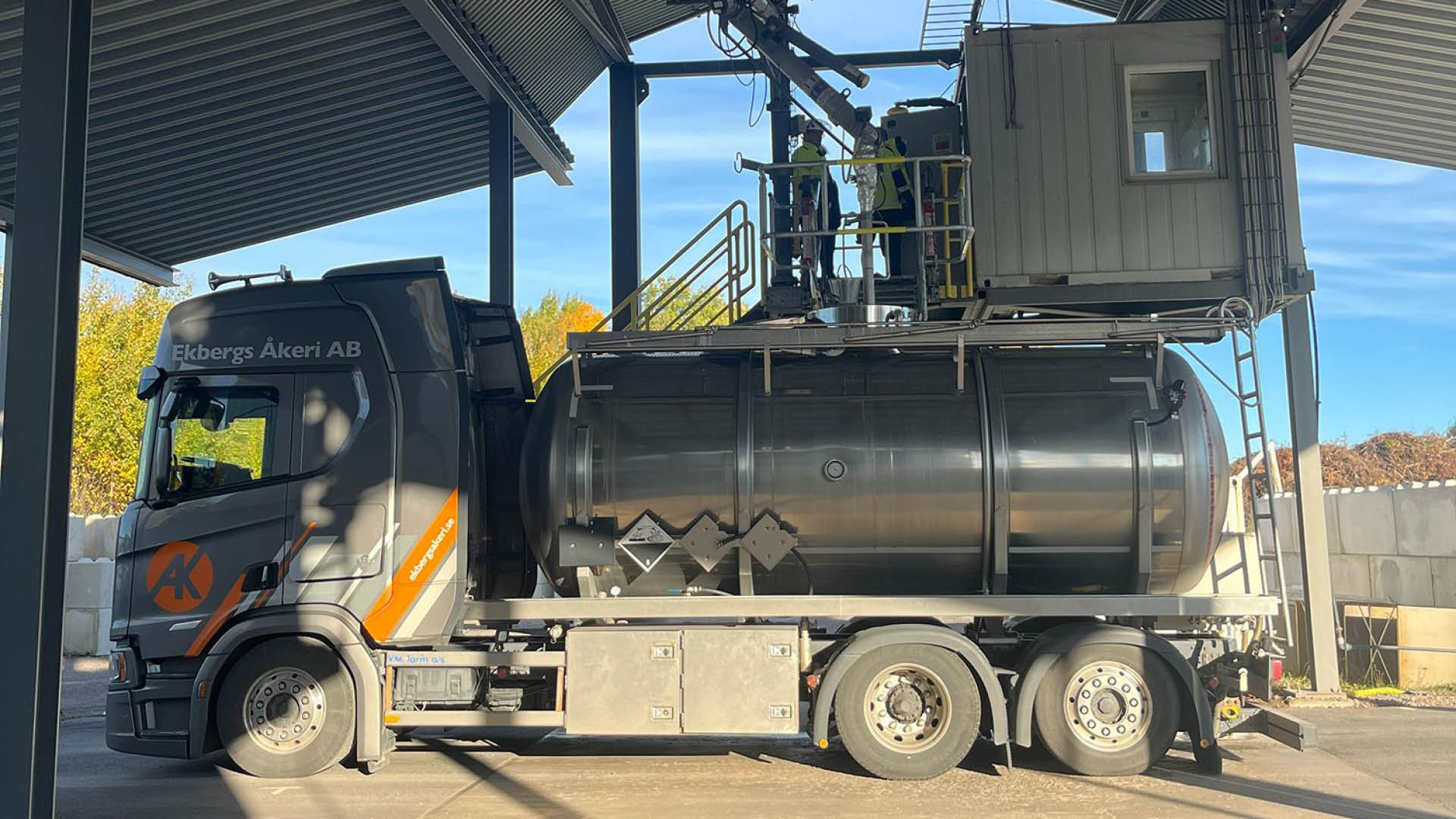
Chemical filling at Kemtrans’ terminal in Norrköping. Here, TopFuel, MCD’s sister company, supplies systems for automatic loading of chemical orders – around the clock, without a driver having to wait for staff.
1. Avoiding downtime and emergency deliveries
When a chemical tank runs dry without warning, two problems arise at once: the treatment process is disrupted, and an emergency delivery has to be arranged. Both are costly. With continuous level measurement and automatic alarms, on the other hand, refills can be ordered in time – and deliveries planned sensibly, rather than rushing a solution when the tank is already almost empty. If you’re unsure where your own tanks stand today, it’s often easiest to get in touch directly and go through the situation with us.
2. Increased demands for preparedness and security of supply
Sweden is currently working actively to strengthen preparedness in food and drinking water supply, where the Swedish Food Agency is the responsible sector authority. Chemicals for treating drinking water and wastewater, for example, are explicitly highlighted as part of what may need to be considered preparedness goods. Exactly which requirements will ultimately apply to individual facilities is admittedly still evolving, but the direction is clear: those who can show that they actually know what is in their tanks – not just estimate it – are better equipped for stricter requirements.
3. Sharper focus on cybersecurity and situational awareness in the water sector
The water sector is also covered by the NIS2 Directive, which sets requirements for cybersecurity and the ability to maintain good situational awareness in critical services. The Swedish Food Agency has announced that supervision under NIS2 will begin during 2026. In practice, this means higher expectations that operating data – including things like chemical levels – can be reported in a structured and traceable way, rather than relying on an estimate that the tank is “a bit over half full”.
Chemical tank level measurement in practice
For anyone running a treatment plant today, this is about having a reliable answer to a simple question: how much is actually in the tanks right now?
That answer needs to come from instrumentation – not from a dipstick used last week, nor from the supplier’s estimate. In other words, it needs to be continuous, logged and easily accessible, so that the right person can act in time.
Together, MCD and our sister company TopFuel have broad experience of preparedness storage of chemicals and flow measurement – from large loading terminals to individual chemical tanks at treatment plants. We therefore deliver level measurement adapted to water and wastewater environments: robust equipment, real-time data available at any time, automatic alarms and logging that make it easy to report stock levels when needed. In other words, investing in chemical tank level measurement is a way to make sure operations never stop unnecessarily.
Want to know more?
Get in touch with us at MCD and we’ll tell you what level measurement could look like at your facility. We have experience of both wastewater treatment plants and waterworks, and work with suppliers and municipalities throughout Sweden.
📧 info@mcd.se | 🌐 mcd.se
This article was written with the help of AI and fact-checked by Jens Johansson.
Sources
- Number of wastewater treatment plants and waterworks in Sweden: Svenskt Vatten
- Number of chemical tanks per facility type: industry estimate, MCD/Jens Johansson
- The Swedish Food Agency’s work on food and drinking water preparedness: livsmedelsverket.se
- NIS2 supervision and cybersecurity in the water sector: Swedish Food Agency, ongoing work on food preparedness
- Photo: MCD/TopFuel (Norrköping terminal). Aerial photo: iStock/Dmitry Tkachuk. Operations technician: iStock/Avatar_023.