

Published in collaboration with MCD’s editorial team and AI.
For a long time, the lubricants industry looked the same: the supplier sells litres, the customer orders and pays per delivery. Now that model is changing. More and more suppliers and buyers call the new model Lubrication-as-a-Service. Here, the product is just one part of a larger package – and the supplier builds that package around monitoring, analysis and uptime, not volume alone.
What is Lubrication-as-a-Service in practice?
A typical setup combines continuous delivery of lubricants with condition monitoring, sample analysis, automatic alerts for deviations and access to engineering support. More and more suppliers also use AI-driven analysis to predict breakdowns weeks in advance, instead of just reacting when something has already failed.
The main difference from the classic setup lies in what the contract measures. Instead of cost per litre, the supplier builds the agreement around measurable results: uptime, energy efficiency and the number of unplanned stops. In other words, the supplier takes greater responsibility for the outcome – not just for the product arriving on time.
Why is the industry moving in this direction?
The driving force is fundamentally economic. An unplanned stop on a major asset can cost between £50,000 and £150,000 per hour, depending on the industry. That cost far exceeds the price difference between different lubricants. It therefore makes more sense to pay for a system that reduces the risk of stoppages than to simply chase the lowest price per litre.
The figures also confirm the trend. Companies that have introduced condition-based maintenance strategies report a 20–35 percent reduction in unplanned stops. In the UK market, industry analysts estimate that around 30 percent of industrial lubricant contracts will include some form of monitoring- or performance-linked element by the end of 2026. Meanwhile, the global lubrication management market is growing by roughly 7–10 percent a year towards 2033/2034 – estimates vary between research firms, but the direction is consistent. Above all, sensors, IoT connectivity and AI analysis are driving this development.
What does it take to actually deliver this?
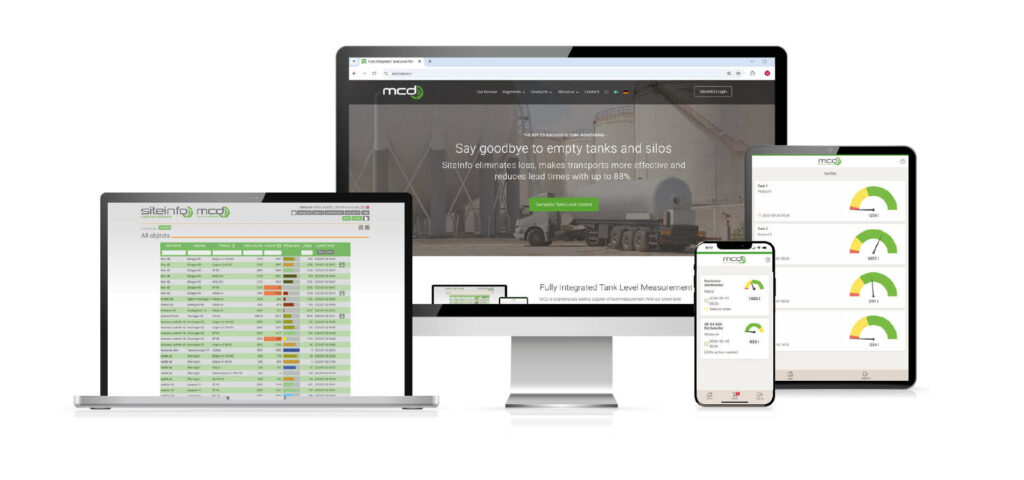
A performance promise is only as good as the data it is built on. To go from “we deliver lubricants” to “we are responsible for your uptime”, the supplier needs continuous, reliable insight into what is actually happening in the tank or container: levels, consumption rate, refills and deviations over time. Without that insight, the performance promise becomes a guess rather than a commitment.
That is exactly why digital inventory monitoring is going from a convenience to a prerequisite. A system like SiteInfo provides precisely this kind of continuous data. It also makes it possible to build towards alerts, trend analysis and eventually predictive insights – instead of just noting after the fact that a tank ran empty too late.
A model already in place for many
Many who already work with digital tank monitoring don’t see this as a new industry trend. On the contrary, it simply describes how things already work for them. The difference between “selling litres” and “selling insight and uptime” is fundamentally about what data you have access to – and that question can be answered today.
Frequently asked questions about Lubrication-as-a-Service
What is Lubrication-as-a-Service? A business model in which the supplier combines lubricant delivery with condition monitoring, analysis and sometimes performance guarantees – instead of just invoicing per volume delivered.
Why is this model becoming more common now? The cost of unplanned stops is often much higher than the price difference between different lubricants. It therefore makes economic sense to pay for solutions that reduce the risk of stoppages, rather than just optimising the price per litre.
What does it take to offer or benefit from such a model? Continuous and reliable data about what is actually happening in the inventory: levels, consumption, refills and deviations over time. Without that data, performance promises are hard to live up to.
Is this only relevant for large sites? No. Smaller sites also benefit from avoiding unplanned stops and from not having to track inventory levels manually – whether or not it is formalised in a service agreement.